Reading papers is a daily routine in research. A top-conference paper runs 8-15 pages: method, experiments, appendix, and possibly supplementary material. Many students (including me, once) dive straight into the details and come out a week later still confused. Here is the "three-pass" approach I use.
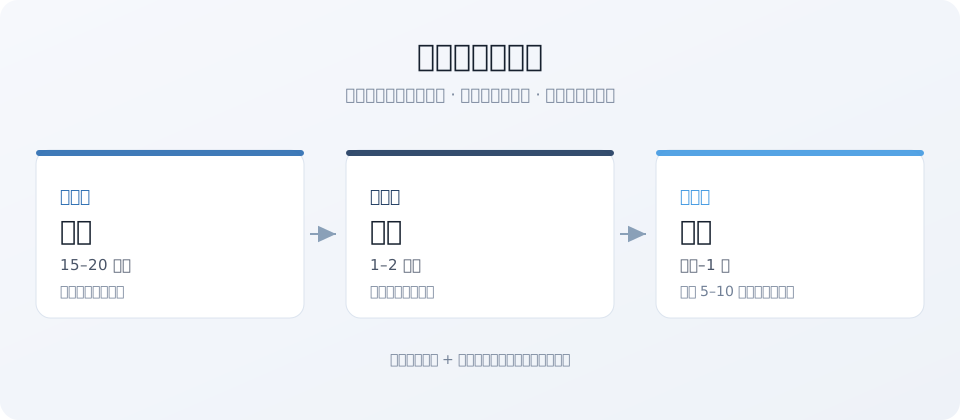
Pass 1: Skim (15-20 minutes)
Goal: decide whether the paper deserves a close read, and which subfield it belongs to.
- Title and abstract: what problem, what method, what result?
- The end of the Introduction: usually 3-5 concrete contributions; this is the densest part of the paper.
- Section and figure captions: skim them to understand the overall structure.
- Conclusion: see what the authors believe their work means.
After this pass you should be able to summarise it in your own words: "This paper targets problem X, proposes method Y, and improves on the state of the art by Z% on dataset W."
Pass 2: Understand (1-2 hours)
Goal: understand the core idea of the method well enough to restate it and explain it to someone else.
- Read the method section carefully, and for every equation ask "what is this computing?"
- Draw a system diagram by hand.
- Skip the heavy derivations; the intuition is the point.
- Mark unfamiliar concepts to look up later instead of breaking your reading rhythm.
After a good paper you can "play back" its method diagram in your head. After a bad one you only remember a pile of symbols.
Pass 3: Reproduce (half a day to a day)
Goal: find the hidden details, whether the experimental setup is sound, and what the authors did not say.
- If you had to reproduce it, what would you run into?
- What the authors left out: how were hyperparameters chosen? How was the data split? What are the failure cases?
- Is the experimental design fair? Is
baselinethe strongest available choice? - Turn the above into 5-10 questions, then look for the authors' code or their students' follow-up papers.
A few habits
- Never read without a pen: every close read gets 1-2 pages of notes, so that six months later you can still reconstruct it.
- Code first, theory second: code that runs makes the method concrete.
- Explain it to a classmate: if you cannot make it clear, you have not understood it.
- Share in a group meeting: forcing yourself to explain it in 20 minutes is the best practice there is.
Summary
Reading a paper is not reading a novel; it is reverse engineering. The first pass tells you whether it is worth reading, the second tells you what the method actually is, and the third is where you internalise the authors' trade-offs. One close read plus three to five skims a week is a comfortable pace.